
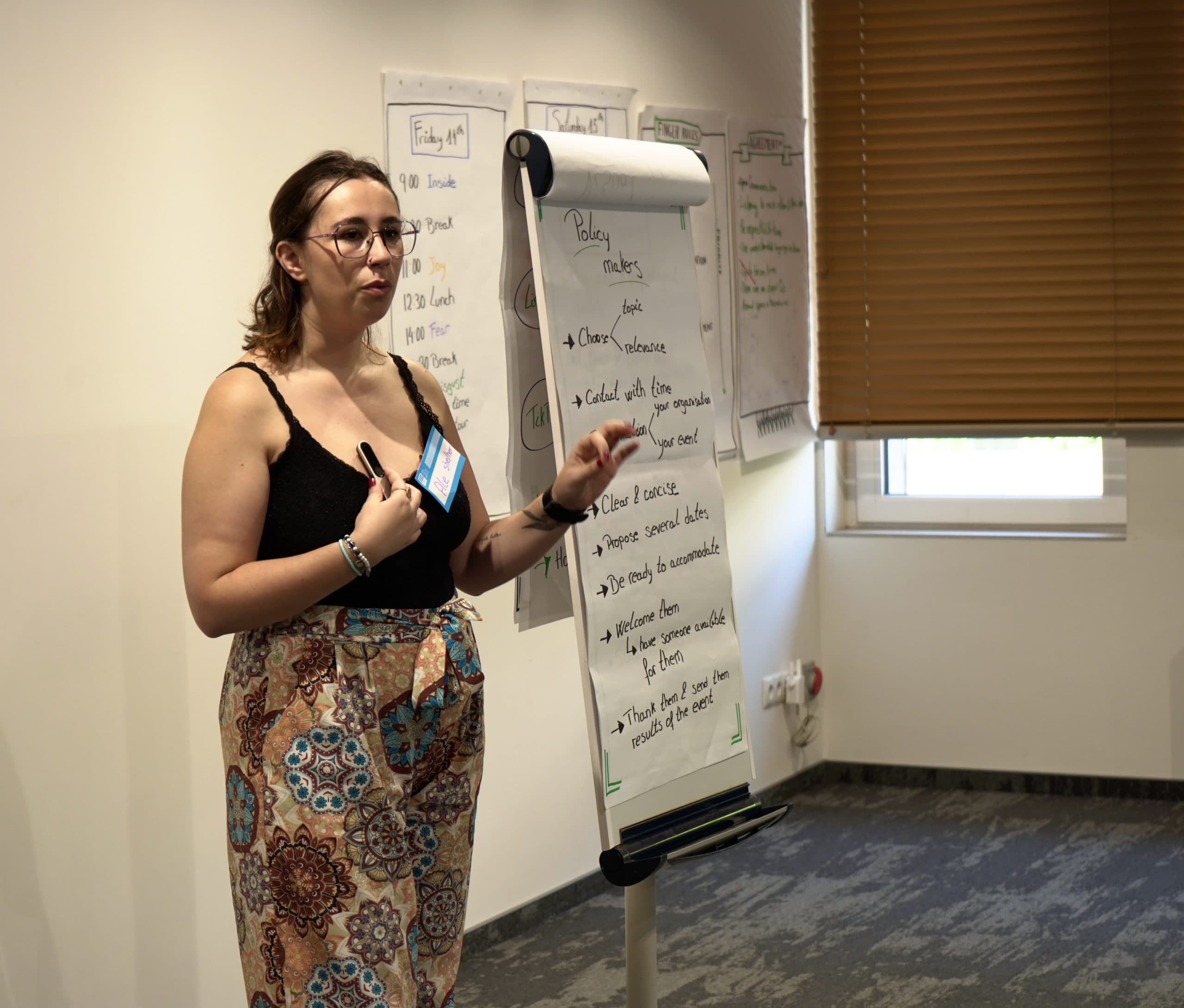
Facilitation.
Business as unusual.
Business as unusual. Meaningful, participatory sessions so your team, board or network can reach decisions, create strategy, generate ideas or align around direction.
Goals first, methods second
No templates for theatre. We co-create every session around your goal, group and reality.
Today’s conversations → tomorrow’s actions
Facilitation that ends in clarity, commitment and concrete next steps — not flipcharts abandoned in a corner.
Safe — and stretched
Psychological safety with enough challenge that ambition moves. Brussels-savvy without the jargon fog.
“With lots of positive energy, authentic interest in both the subject, the guests and the audience, he made the evening very interesting as well as entertaining.”
Business as unusual.
Clear outcomes.
We don’t believe in one-size-fits-all. Every facilitation starts with a short, sharp intake where we define what success looks like. From there we design the session: goals first, structure second, interaction third.
We bring the right methods — classic ToP workshops, world café, tightly timed decision rounds — and adapt them to your group, context and culture. After the session you get a clean synthesis and next steps that lead somewhere.
Brussels-savvy, yet refreshingly clear: we know the dynamics and jargon of the bubble so we can help you cut through them. Safe spaces — but out of the comfort zone when ambition needs a push.
Explore
Sessions we facilitate
- Board room meetingsWhen a board or committee must reach alignment — neutral process, clear ground rules, decision frameworks adapted for EU-style cycles.
- Strategy sessionsStructured dialogue so strategy leaves the flipchart and enters the plan.
- Brainstorm & Innovation WorkshopsCreative methods with a clear finish line — ideas ranked, owners assigned.
- Team Meetings & OnboardingKick-offs and onboarding that build shared language fast.
- Citizen Assemblies & Stakeholder DialoguesInclusive processes for complex policy and public questions.
How we work
From intake to next steps
Define success
A short intake: who is in the room, what must be true when it ends, and which tensions we should not ignore.
Design the session
Methods, timing and energy matched to your group — ToP, world café, decision rounds — never a one-size template.
Facilitate & synthesise
We hold the process so everyone can contribute. You leave with a clean synthesis and owned next steps.
Give your meeting the facilitation it deserves
Let's take your session to the next levelFAQ
FAQ — Facilitation
Can you facilitate citizen assemblies and stakeholder dialogues on EU policy?
Yes. We design, host and harvest participatory citizen and stakeholder assemblies on EU policy issues such as climate, migration and democracy reform. We run multi-session public or expert assemblies, design inclusively and in multiple languages, and deliver transparent synthesis and policy reporting — accessible to outsiders yet substantive for insiders.
Do you facilitate in languages other than English?
Yes. Our collective works in many languages across EU member states, and we design inclusive sessions that lower language barriers so every voice can take part. We can facilitate multilingual assemblies and dialogues, and adapt the process to your group’s culture and context.
Do you only work in Brussels?
No. We are based in Brussels and know the EU bubble intimately, but we facilitate across Europe — and online or hybrid when that suits you. We bring Brussels-savvy process design to wherever your team, board or network is.
How do you make sure a session leads to output?
We start with a short, sharp intake to define together what success looks like, then design the session backwards from that goal. We use structured process design, time-boxing and clear decision frameworks to keep the group focused, secure buy-in, and end with agreed outcomes and next steps — not an open-ended conversation. While we can never guarantee you get the outcome you want, we can at least do everything in our might to create the right circumstances.
What do we get after the session?
You get more than flipcharts. We deliver a clean synthesis of what was discussed and decided, plus concrete next steps and accountability points that actually lead somewhere. The aim is always that today’s conversation turns into tomorrow’s action.
What facilitation methods do you use?
We choose the method to fit your goal, group and context — never a template. Depending on the session we use Technology of Participation (ToP), World Café, Open Space, appreciative inquiry, fishbowl, consensus mapping, focused conversation and structured decision rounds. Or we go really creative with roleplays, serious games or a debate tournament. Goals come first, structure second, interaction third. We design the process around what success looks like for you.
What is the difference between facilitation and moderation?
Facilitation guides a group through a process to reach a concrete outcome — a decision, a strategy, a set of ideas, or alignment. Moderation guides a public event, like a conference or panel, for an audience. In short: facilitation is group-facing and outcome-driven; moderation is stage-facing and audience-driven. We do both, and for moderation, we have a facilitatory approach: We want the audience to participate in the event leading to outcomes.
When should we hire an external facilitator?
Hire a facilitator whenever a group needs to produce something together rather than just listen. That includes board and committee decisions, strategy sessions, brainstorms, team alignment and onboarding, and citizen or stakeholder assemblies. If the room has to leave with clarity, commitment and next steps — not just information — you need facilitation.
Who do you facilitate for?
We facilitate for EU institutions, umbrella associations, advocacy networks, think-tanks, NGOs, PR and public affairs agencies, and corporate and institutional teams of all sizes. Whether it’s a DG advisory board, an NGO innovation lab or a strategy retreat, we adapt the process to your organisation and its context.